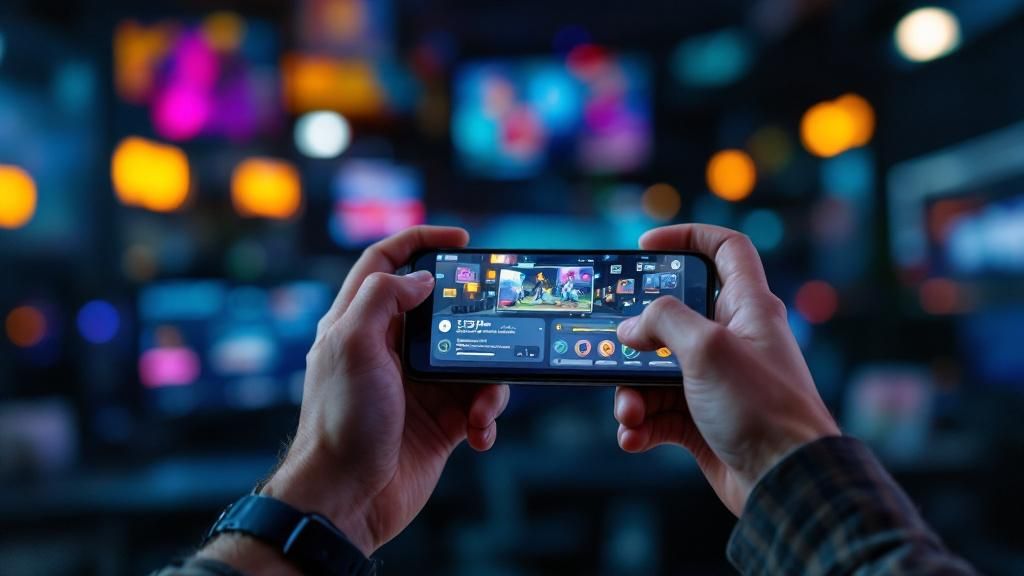

The gaming industry has experienced a significant transformation in recent times, with mobile games driving the push towards inclusivity. Accessibility features—from configurable controls and subtitles to colourblind modes and haptic feedback—have transformed how millions of players with disabilities enjoy gaming. This article examines the key accessibility features now embedded in popular mobile titles, examining how developers are dismantling limitations and ensuring that everyone, regardless of their abilities, can appreciate compelling gameplay and immersive worlds.
Accessibility Display Features
Visual accessibility features represents one of the most essential areas of mobile game development, enabling players with vision loss or colour vision deficiencies to participate fully with games. Developers now incorporate features such as customisable text sizes, enhanced contrast options, and customisable colour schemes that address varying visual requirements. These features permit players to adjust UI elements and text displayed in-game to match their needs, guaranteeing that essential information continues to be clear and distinct during gameplay.
Colourblind modes have become progressively sophisticated, offering various filtering choices tailored to different types of colour blindness, including protanopia, deuteranopia, and tritanopia. Additionally, numerous contemporary mobile titles provide audio reader functionality and auditory explanations for on-screen visuals, transforming graphical information into accessible formats. These comprehensive visual accessibility tools demonstrate the sector’s dedication to inclusivity, allowing gamers with different visual capacities to access menus, read dialogue, and engage with game stories without compromise and frustration.
Sound and Touch Response Systems
Audio availability remains a fundamental element of inclusive mobile gaming design. Developers now incorporate extensive caption systems, audio visualisers, and mono audio options to support deaf or hard of hearing gamers. Many titles include configurable auditory prompts that transform crucial game data into on-screen notifications, guaranteeing gamers remain aware of important narrative moments or surroundings alerts. This multisensory approach allows all players to remain completely immersed in the game experience.
Haptic feedback systems has emerged as a transformative accessibility feature, delivering tactile responses that communicate gameplay data through haptic vibrations. Players who are sight-limited gain considerable advantage from haptic signals that indicate nearby opponents, completed tasks, or shifts in game environment. Contemporary mobile devices generate sophisticated haptic feedback, allowing developers to build immersive tactile experiences that surpass standard visual information delivery systems and enhance immersion for all players.
The integration of audio and tactile solutions illustrates developers’ commitment to developing truly inclusive experiences. By layering various sensory feedback systems, mobile games now support different accessibility needs whilst maintaining compelling gameplay. These advancements prove that accessibility features serve the whole player community, not merely those with specific disabilities, rendering games more enjoyable and intuitive for everyone.
Customisation of Controls and Input Options
One of the most important advancements in gaming on mobile devices accessibility is the capacity to tailor controls to suit each player’s needs. Rather than requiring players to adapt to rigid, standardised control schemes, modern mobile games offer extensive remapping options that allow users to remap buttons, adjust sensitivity settings, and modify input thresholds. This customisation capability proves highly beneficial for players with restricted hand control, tremors, or those utilising alternative input devices. Developers understand that accessibility isn’t universal solution; instead, they provide granular control options enabling each player to set up their gaming experience precisely.
Beyond conventional tactile controls, mobile games increasingly support varied control methods to accommodate varying physical abilities. Spoken instructions, eye-tracking technology, and specialised gaming controllers can now work smoothly with mobile titles, expanding accessibility possibilities significantly. Switch-based controls allow players with severe mobility limitations to enjoy games through straightforward, intentional inputs. Furthermore, adaptive controllers designed specifically for disabled gamers have become increasingly compatible with mainstream mobile platforms. These innovations demonstrate developers’ commitment to eliminating technical barriers, ensuring that individual physical limitations need never stop people from experiencing the joy and engagement that mobile gaming offers.
Sector Influence and Future Development
The integration of accessibility features into gaming on mobile devices has sparked substantial industry-wide transformation, encouraging major publishers and independent developers alike to focus on accessible gameplay. This shift has expanded the potential player base considerably, enabling millions of individuals with disabilities to engage with gaming spaces previously closed to them. As a result, accessibility has evolved into not simply an ethical imperative but a sound business strategy, driving new developments and market differentiation. As additional games introduce these features, user demands keep changing, positioning inclusive design as a fundamental requirement rather than an optional extra to contemporary gaming.
Looking ahead, the outlook of mobile gaming accessibility appears distinctly promising, with emerging technologies offering unprecedented possibilities. Artificial intelligence and machine learning are delivering more sophisticated customisation options, whilst advances in haptic technology promise enhanced sensory engagement for players with visual impairments. Developers are engaging actively with accessibility experts and disability organisations during production, ensuring that accessible design becomes woven through development workflows from inception. This progressive strategy suggests that next-generation mobile gaming will offer substantially broader inclusive options, ultimately creating a gaming landscape where ability becomes genuinely irrelevant to participation.
